
Crabbing and Clamming on Oregon's Adventure Coast
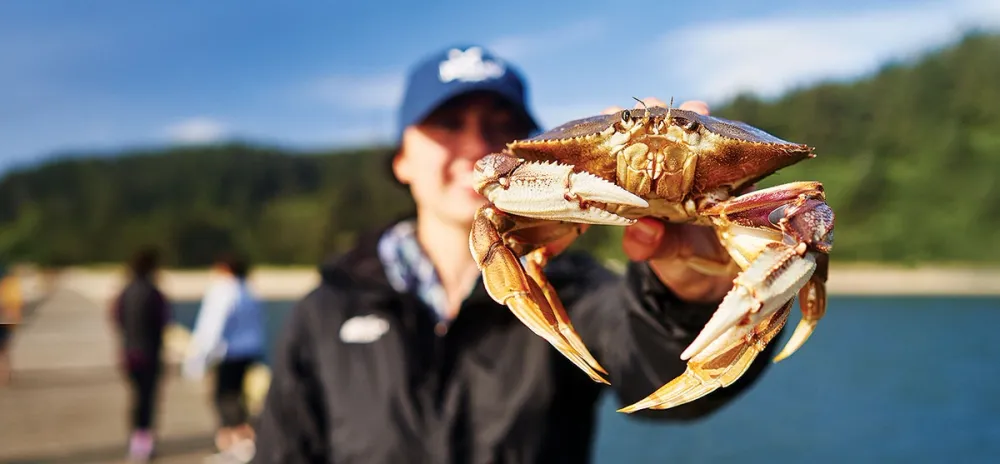
Fishing in Oregon – and on Oregon's Adventure Coast – doesn't just have to be about casting lines and reeling ‘em in. In fact, some of the most popular fishing in these parts is more about shovels, pots and shellfish. We're talking about clamming and crabbing.
Throughout the year, low tides provide access to a bountiful resource here: clams. A clam-digging adventure on the tidelands of Coos Bay can result in a tasty treat whether served in chowder, steamed or fried. The most common varieties found around the bay include gaper, cockle, littleneck, softshell and butter. Check the Oregon Department of Fish and Wildlife for the most current shellfish regulations and harvest notices (opens in new tab).
No trip to Oregon's Adventure Coast is complete without Dungeness crab, and the best crab are always the ones you bring up yourself from the waters of lower Coos Bay. Rent or buy a crab ring and try your luck — the payoff is a fresh crab feast you'll always remember, and you'll keep coming back for more!
Go Crabbing in Charleston
Dungeness crab is a staple of life on Oregon’s Adventure Coast, and the lower Coos Bay area is one of the best places on the coast to catch your own. Many locals swear by the months with an “R” — January through March and September through December — when Dungeness are most commonly caught, but crabbing is productive much of the year.
The best part? You don’t need experience, a boat, or a big budget to get started. The public docks at Charleston Marina (opens in new tab) give families and first-timers direct access to the water and a front-row seat to daily life on a working fishing dock. Drop a baited crab ring, wait, pull it up — it really is that simple.
A few things to know before you head out:
- A shellfish license is required for anyone age 12 and older. Pick up a shellfish license online at ODFW (opens in new tab) or at a local tackle shop.
- Check current regulations and limits before heading out — the ODFW “How to Crab” guide (opens in new tab) is a great place to start.
- Gear is easy to rent or buy locally — crab rings, bait, gloves, and a cooler are all you need, and local shops have it all.
Go Clamming on the Tideflats
Clamming is one of those activities that sounds simple and turns out to be genuinely delightful. Low tides expose broad mudflats around Charleston where you can dig for gaper, cockle, littleneck, softshell, and butter clams — and the whole family can get involved. Clamming is available year-round, though spring, summer, and fall tend to offer the best conditions.
Charleston is a great starting point for first-timers. Well-known spots like Charleston Triangle and Charleston Flat are easy to access and reliably productive. Our clamming guide offers tips and maps of local clamming areas to help plan your outing around tides and access points. Point Adams, at the end of Boat Basin Road, is another favorite — especially for cockle clams at low tide.
Tips for a successful outing
- Go at low tide: zero and minus tides are even better, exposing large areas of mudflats. Check NOAA tide tables for Coos Bay (opens in new tab) before heading out and stop by one of our Visitor Information Centers in Coos Bay, North Bend, and Charleston for local tips.
- Check current regulations and health advisories: Review ODFW shellfish regulations (opens in new tab) and the Oregon Department of Agriculture shellfish closure page (opens in new tab) for the latest updates before heading out.
- Gear to bring: waterproof boots (trust us), a shovel or clam gun, a bucket or mesh bag, and waterproof gloves.
Where to Rent Gear & Get Advice
Use our equipment and rental guide to discover local shops. They’ll also have up-to-date information on conditions, tides and regulations — and most rent everything you need with a good helping of advice.
While You’re There
Charleston is worth a full day. After your crabbing or clamming adventure, the Cape Arago Highway Loop connects Sunset Bay, Shore Acres, and Cape Arago State Park in one easy scenic drive. The Charleston Marine Life Center (opens in new tab) at the marina is a great stop for kids and adults alike, with a touch tide pool and live marine exhibits.
And when you’re ready for a meal, Charleston has you covered — Portside Restaurant & Lounge (opens in new tab), Miller’s at the Cove (opens in new tab), and Monkey Business (opens in new tab) are all local favorites.
For more information, check out our full Crabbing and Clamming adventure pages, or stop by one of our Visitor Information Centers in Coos Bay, North Bend, or Charleston.