
What Every Visitor Needs to Know About Beach Safety on Oregon's Adventure Coast

If you’re planning a trip to Oregon’s Adventure Coast: Coos Bay, North Bend, and Charleston this spring or summer, you’re in for something truly special. Our undeveloped beaches are like nothing else on the West Coast. Miles of sandy beach that feel like yours alone. Dramatic sea cliffs. Tide pools teeming with life. It’s no wonder so many nature lovers travel from all over the country to experience this corner of the southern Oregon Coast. But like all wild places, it asks something of its visitors: a respect for the power of nature and an awareness of your surroundings, for your safety and the safety of those around you.
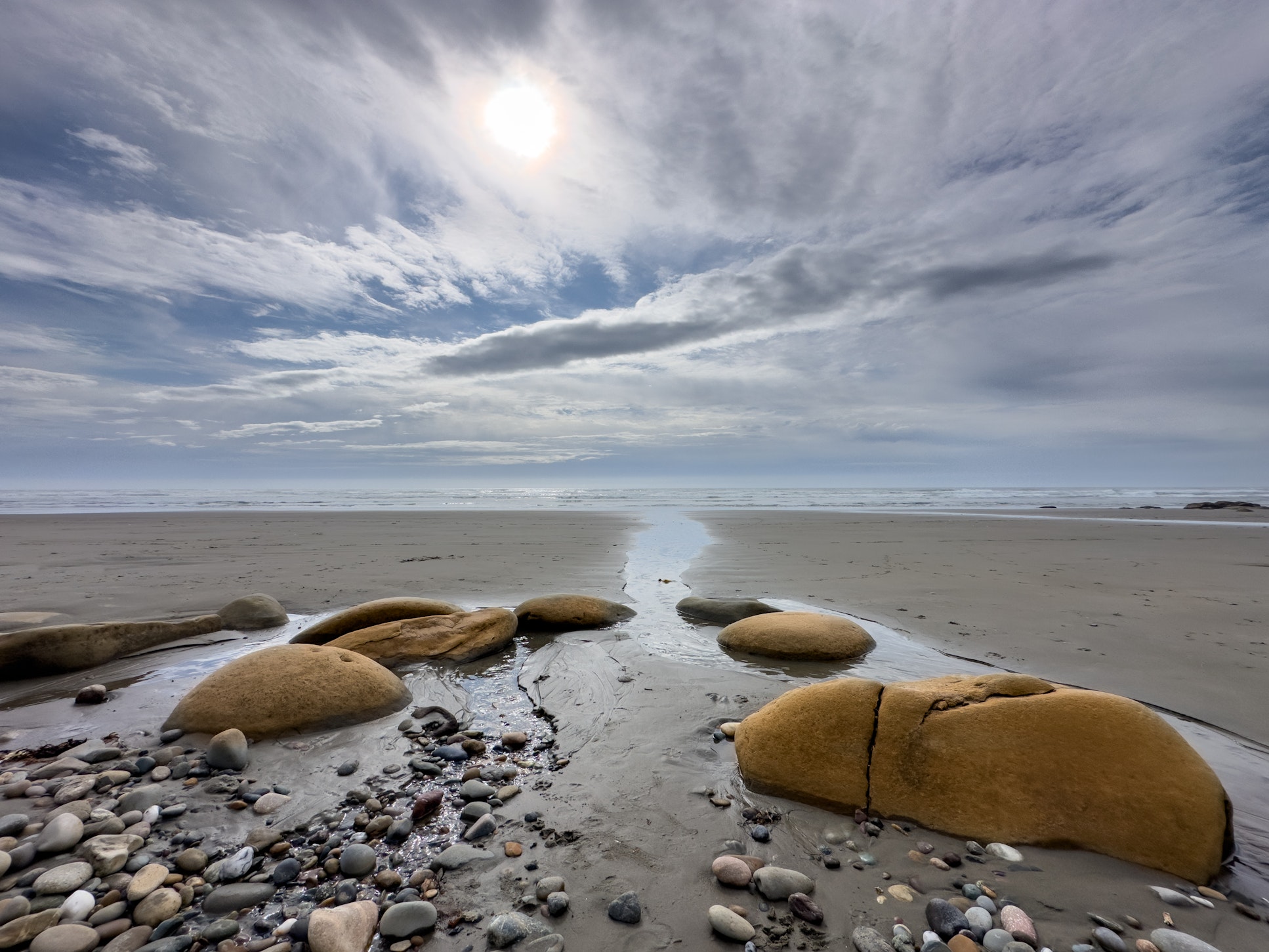
The Oregon Coast is beautiful but is can also be unpredictable. But don’t let that scare you away; it just means you need to come prepared. A little knowledge goes a long way toward keeping your adventure fun and everyone in your group safe this summer. Here are some essential beach safety guidelines every visitor should know:
Rule #1- Never Turn Your Back on the Ocean. This is the golden rule of the Oregon Coast, and it applies every single time you visit, even on the calmest, sunniest days. Teach your children this rule before you leave your car: Always. Keep. One. Eye. On. The. Water.
Whether you’re building a sandcastle with the kids at Bastendorff Beach, exploring the shoreline near Sunset Bay State Park, or taking photos at the ocean’s edge near Shore Acres. It takes one moment of distraction for conditions to change.Sneaker waves are arguably the most serious hazard on the Oregon Coast, and they are exactly what the name suggests: waves that arrive without warning, surging far up the beach with tremendous force. They’re impossible to predict and carry enough power to sweep adults off their feet in an instant. To make things worse, these waves carry large amounts of sand that can saturate your clothing, making it extremely difficult to escape. Watch what happens when this beachgoer just happened to be recording at the beach when a sneaker wave came in, sending him and others scrambling for safety (thankfully, they all made it to safety):
Rule #2- Respect the Logs (Yes, the Logs). The Oregon Coast is famous for its driftwood, and the beaches around Coos Bay, North Bend, and Charleston are no exception. Those massive logs scattered along the sand may look like natural benches or great spots for a photo, but they are one of the coast’s most underestimated hazards. A log that appears completely stationary can be moved by even a small wave; the water simply lifts it and rolls it without warning. Even a log that looks small can be waterlogged and weigh several tons, with enough force to crush or trap anyone caught underneath it. People have lost their lives on Oregon beaches because of driftwood logs. This is not the place to sit, climb, or let children play. If you see a log in the surf or on wet sand, keep your distance and keep children well away.
Rule #3- Know Your Rip Currents. Rip currents are fast-moving channels of water that pull away from shore, and they are stronger than even the best swimmer. If you’re wading or swimming, and even the shallows here can be tricky, know how to spot them. Rip currents often appear as dark, choppy water and may be accompanied by foam or debris floating out toward the open ocean. If you spot one, avoid the area entirely.
If you ever find yourself caught in a rip current, stay calm. Don’t try to swim straight back to shore; you’ll exhaust yourself fighting the current and lose. Instead, swim parallel to the beach until you feel the pull release, then angle back toward land. The current is fast but narrow; escaping it to the side is far more effective than fighting it head-on.
Rule #4- Check the Tides Before You Go. Tide tables are your best friend on the Oregon Coast, and they’re easy to find. Free copies are available at Visitor Information Centers in Coos Bay, North Bend, and Charleston , Oregon State Park offices , local bait/tackle shops , the Oregon International Port of Coos Bay , and several local lodging properties and campgrounds . You can also find current tide information online at NOAA’s website before you leave home.
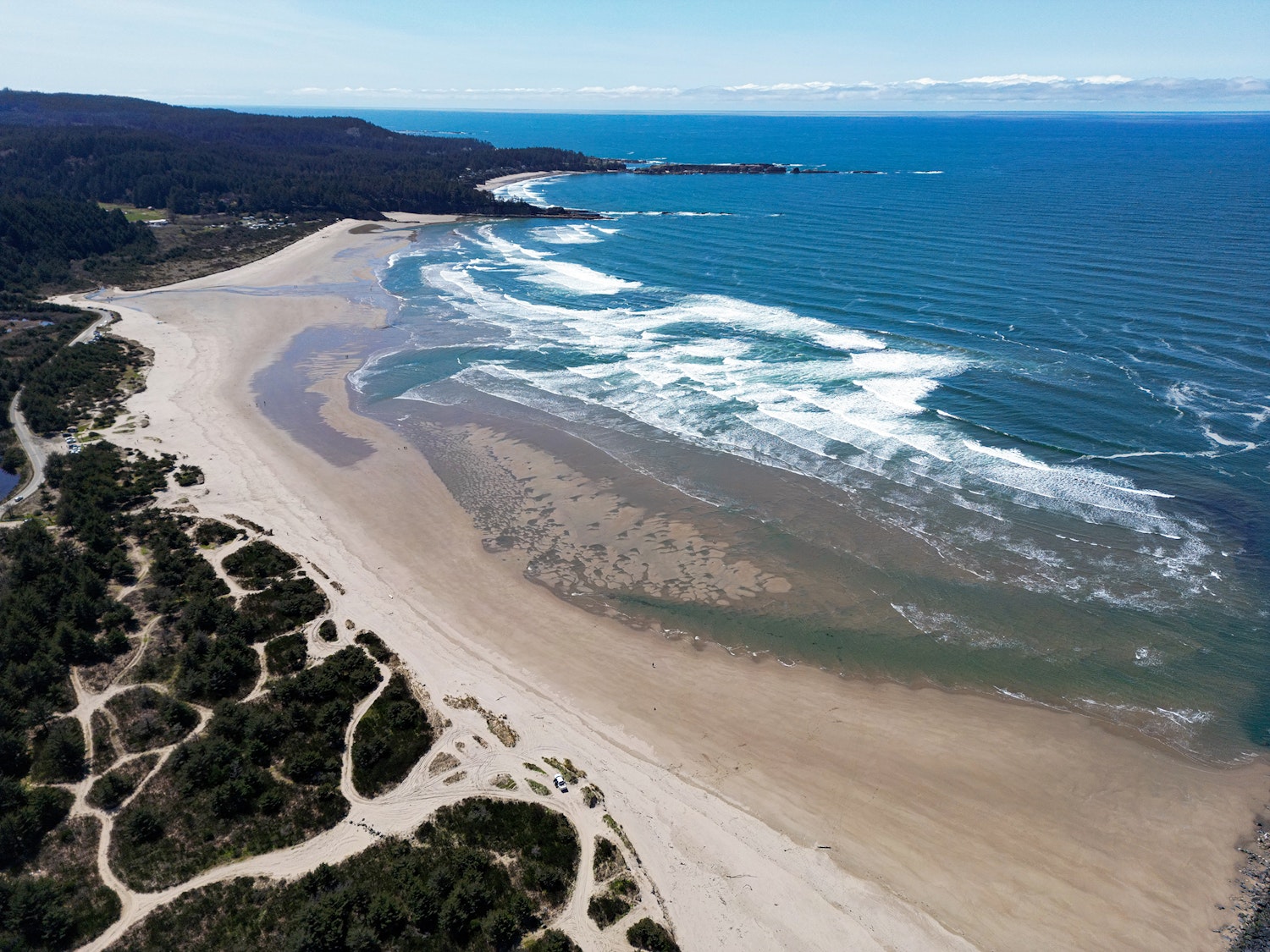
Tides matter more here than you might expect. Incoming tides can quickly isolate rocks and headlands from the shore, leaving you stranded if you’ve wandered out onto a rock formation without knowing when the water is coming back in. Always know the tide schedule before exploring beaches with rocky areas, sea caves, or coves. The beaches along the Cape Arago Highway, including Sunset Bay, Shore Acres, and Cape Arago State Park, are especially worth checking before you explore, as the terrain varies dramatically at different tide levels.
Rule #5- Beach Fires: A Guide to Building, Enjoying, and Extinguishing Safely. Few things complete an evening on the Oregon Coast like a beach fire, but where and how you build one matters enormously. Fires are never allowed upwind of shoreline vegetation, inside dunes, near large logs or driftwood accumulations, or within 25 feet of beach access points or combustible seawalls. The safest spot is open dry or wet sand, well away from vegetation, private property, and park facilities. Fires may also be temporarily prohibited during high fire hazard periods, so look for posted signs at beach access points or check current restrictions at the Oregon State Parks website . Beach fires are not permitted in designated western snowy plover management areas either; learn more here .

Keep your fire no larger than a three-foot cube and use only paper products or untreated natural wood. Buy locally harvested or certified heat-treated firewood to help prevent the spread of the emerald ash borer , and never use gasoline or petroleum-based products to start a fire. When it is time to leave, extinguish the fire completely with water, not sand, and break it apart. Sand insulates coals, keeping them dangerously hot for hours and posing a serious burn risk to anyone walking by barefoot. Covering a fire with sand is actually prohibited under Oregon law. Any fire-related violation is a Class A offense and can result in a citation of up to $440. See the General Ocean Shore State Recreation Area Rules for full details.
Rule #6- Dress for the Oregon Coast, Not a Southern California Beach. One of the most common mistakes visitors make is underestimating how cool the Oregon Coast can be, even in summer. Temperatures on Oregon’s Adventure Coast average in the mid-to-upper 60s during summer months, roughly ten degrees cooler than Portland, and ocean breezes can make it feel significantly chillier. Ocean water itself stays cold year-round, which means hypothermia is a real risk for anyone spending time in the water without appropriate gear.
Layer up, bring a windbreaker, and if you’re surfing or paddleboarding at Bastendorff Beach or kayaking the bay, wear a wetsuit. Local shops like Waxer’s Surf Shop and Bahama Boards in Coos Bay offer rentals and gear, along with helpful advice on conditions.
Rule #7- Come Ready to Fall in Love With This Place. Oregon’s Adventure Coast is one of the most pristine and unspoiled stretches of coastline in the country. Come with a sense of adventure, a healthy respect for the region, and the knowledge that a little preparation makes all the difference. Check the tides, watch the water, keep the kids and your pets close, and be ready to make some wonderful memories.
Additional Resources
For more information on visiting Oregon’s Adventure Coast, contact the Coos Bay–North Bend–Charleston Visitor & Convention Bureau at oregonsadventurecoast.com.
