
A Visitor's Guide to Fishing, Crabbing, and Clamming in Charleston, Oregon
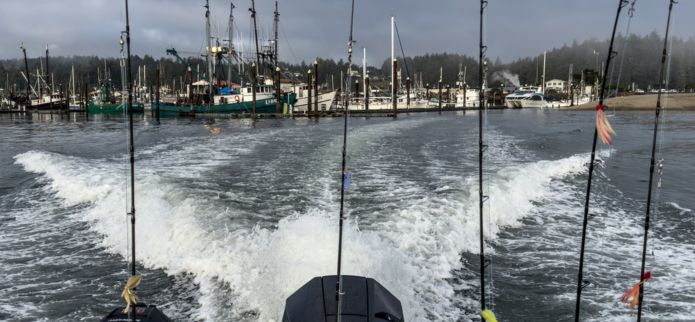
Ahhh, Charleston… how we love this unique Oregon’s Adventure Coast treasure, a place locals love and where daily life revolves around the water. If fishing, crabbing, or clamming are on your must-do list, Charleston, Oregon , is a great place to start. This active fishing port offers easy access to the ocean, bays, estuary, and rivers, along with a bustling marina, public beaches, and some of the freshest seafood on the West Coast. With so many different fishing styles and catches available throughout the year, Charleston is a true year-round destination for casting a line.
Whether you’re brand new to fishing or have plenty of experience, Charleston makes it easy to get out on the water . This guide breaks down fishing , crabbing and clamming options in Charleston, from where to go and who to book with to what’s in season, so you can plan a trip that fits your schedule and your comfort level on Oregon’s Adventure Coast.
Fishing in Charleston, Oregon

Fishing is part of everyday life in Charleston, and there are plenty of ways for visitors to join the fun. You can try your luck from public docks, launch your own boat, rent a kayak, or head out with a local charter . There is no need to bring gear with you; local rental and outfitting shops have what you need and can point you in the right direction.
Here are a few charter companies that run offshore trips out of Charleston Marina, offering seasonal fishing opportunities and earning high marks from both visitors and locals. Please note that services are weather-dependent, and calling ahead is recommended.
- Adventure Charter Fishing - Charleston Marina, 833-746-3474
- Betty Kay Charters - 90389 Albacore Ave, 800-752-6303
- Coos Bay Charters - Charleston Marina, 831-428-2181
- Fish On Charter Services - Charleston Marina, 458-710-0870
- Lucky Landings Guide Service - Charleston, 541-274-0972
- Lucky Me Charters - Charleston Marina, 541-948-3905
- Mayhem Charters - Charleston, (541) 944-0420
- Pacific Charter Services - 63357 Boat Basin Rd, 541-378-3040
- Sharkys Charter Fishing 63422 Kingfisher Road - Suite B, 541-260-9110
- SOA Charters Albacore Lane, 541-430-1013
Here are a few tips to keep in mind as you plan a fishing adventure in Charleston:
-
What you can catch changes with the season. Winter typically brings steelhead, surf perch, and rockfish, along with crabbing and clamming, while spring shifts to salmon, surf perch, and bass. Species like lingcod, halibut, and tuna are available at different times of year, depending on conditions and regulations. We recommend downloading our list of local fishing resources to help you plan your trip.
-
An Oregon fishing license is required unless it’s a Free Fishing Day. Daily, multi-day, and annual licenses are available at sporting goods stores and online through theOregon Department of Fish and Wildlife . Bait shops are also a good place to get your fishing license as well as check current conditions and get local tips. Find a list of vendors here (scroll to Coos Bay & North Bend for local vendors).
-
Weather and tides affect fishing conditions, especially during the winter months, so checking forecasts and tide tables ahead of time is recommended. Pick up your local Tide Table at all three local Visitor Center locations .
Crabbing in Charleston, Oregon
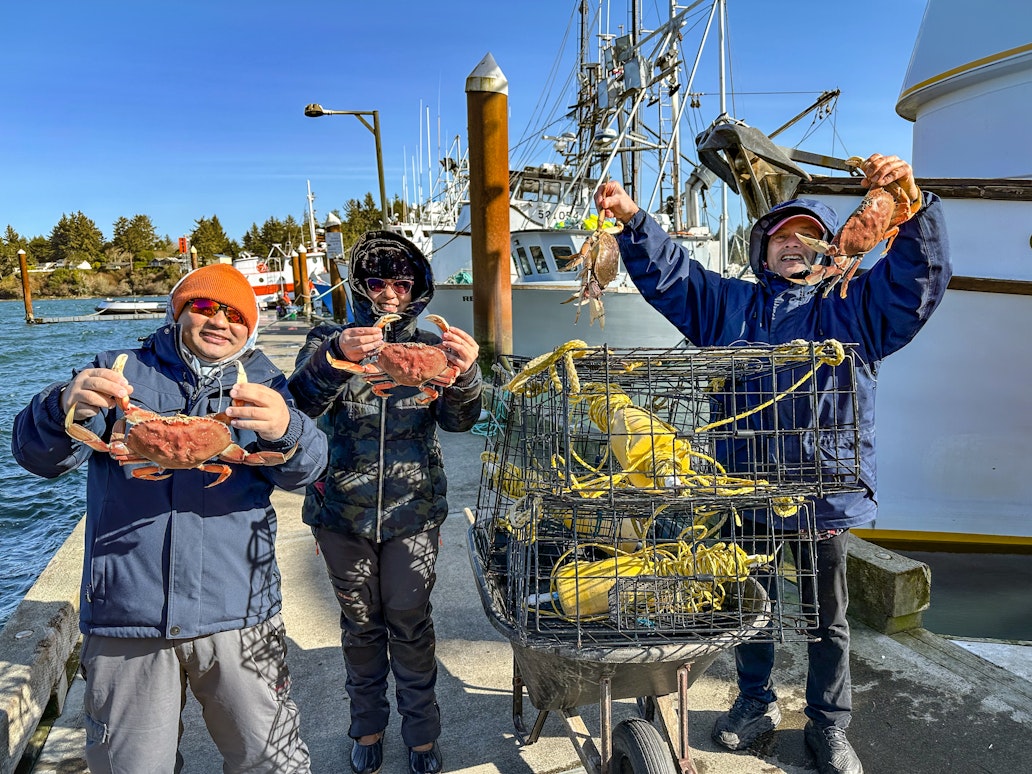
Crabbing is another favorite activity on Oregon’s Adventure Coast, and Charleston is one of the easiest places to try it. Many locals swear by the months with an R (January through March) when Dungeness crab, a staple of the Oregon Coast diet, are most commonly caught.
Visitors are often surprised to learn how accessible crabbing is. You don’t need special skills or experience, nor do you need a boat or a lot of money to give crabbing a try in Charleston. Public docks at Charleston Marina provide direct access, offering families and first-time crabbers a relaxing way to spend a few hours and experience daily life on the docks. The Oregon Department of Fish and Wildlife is a wonderful resource for anyone interested in crabbing on the Oregon Coast, whether it’s your first time or your thirtieth. Be sure to take a look at their “How to Crab ” flyer for helpful tips and important details before you head out. Some key tips to remember:
- A shellfish license is required for crabbing, and anyone age 12 and older must have one.
- Check current regulations and limits through the Oregon Department of Fish and Wildlife before heading out.
- Local shops and marina markets are great resources for tips on timing, setup, and current conditions.
- Basic equipment, including a crab measuring tool, pots or rings, bait, gloves, and a cooler, can be purchased or rented at local bait and tackle shops , so there’s no need to bring gear with you.
Clamming on Oregon’s Adventure Coast
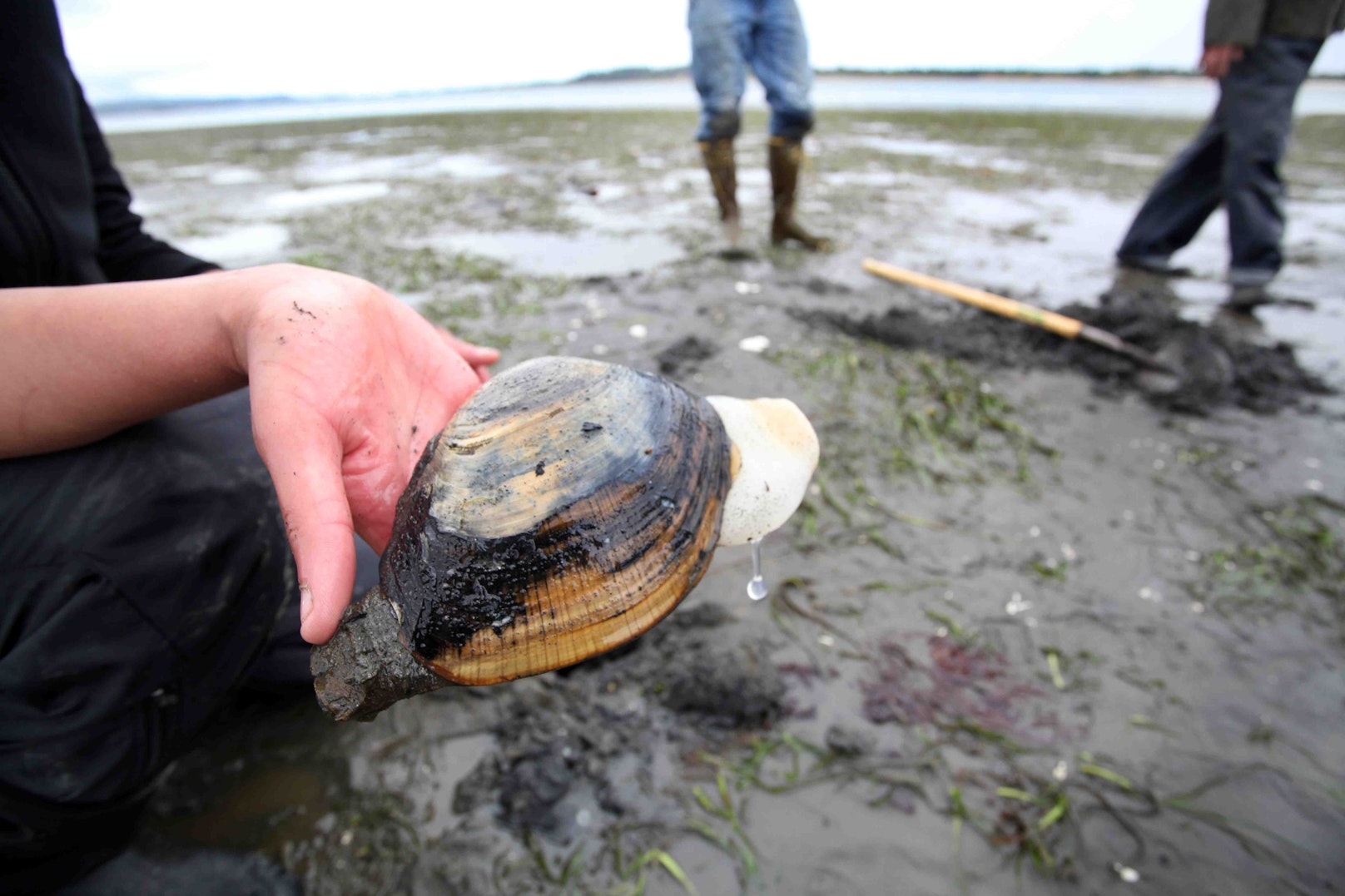
Clamming is an easy way to spend time outdoors on Oregon’s Adventure Coast and can be harvested year-round, though spring, summer, and fall typically offer the most ideal conditions. Clamming is an easy, family-friendly way to take part in a long-standing Oregon Coast tradition, and it’s accessible to visitors of all ages and experience levels since it requires little gear and no special skills.
Charleston is a perfect option for first-time clammers as it has well-known spots , including Charleston Triangle and Charleston Flat, where broad tide flats support species such as gaper, cockle, littleneck, softshell, and butter clams. Point Adams, located at the end of Boat Basin Road in Charleston, is another popular area, especially for cockle clams during low tide.Maps of local clamming areas are available and can help visitors plan their outing around tides and access points. For the best experience, follow these tips:
-
Check the tides. Always go at low tide for a successful outing. Zero and minus tides are even better because they expose large areas of mudflat, providing the best access. Tide tables are available online, at local retailers, and at Visitor Information Centers in Coos Bay, North Bend, and Charleston .
-
Get a shellfish license (it’s required for clamming). Anyone age 12 and older must have a valid Oregon shellfish license. Licenses can be purchased online through the Oregon Department of Fish and Wildlife or at local retailers such as sporting goods stores and tackle shops .
-
Check current regulations and health advisories before harvesting shellfish. Temporary closures and safety updates are posted by the Oregon Department of Fish and Wildlife and the Oregon Health Authority.
-
There are local bait-and-tackle shops that will rent clamming tools ** ** and can provide guidance on timing and locations. Basic equipment includes a bucket or mesh bag, a shovel, rake, or clam gun, waterproof boots (trust us on that one), and waterproof gloves. Consider bringing a cooler, access to fresh water for rinsing, towels, and a tide chart.
Where to Rent or Buy Fishing Gear & Supplies in Charleston
- Davey Jones Locker - Cape Arago Highway & Boat Basin Road
- Englund Marine - 91146 Cape Arago Hwy (Note: Englund Marine does not sell fishing licenses at this time.)
- Monkey Business Marina Market - 63516 Kingfisher Rd.
- ODFW Charleston Office 63538 Boat Basin Dr (Note: ODFW’s Charleston office only sells fishing licenses for those last-minute visitors who wish to go fishing while in the Charleston Marina but don’t have a permit.)
Other Things to Do in and Around Charleston
In addition to fishing, crabbing, and clamming, Charleston offers easy access to state parks, beaches, and educational attractions. Many of these sites are connected by the Cape Arago Highway and can be explored in a single day.
Cape Arago Highway Loop- The6.5-mile Cape Arago Highway Loop connects Sunset Bay State Park, Shore Acres State Park, and Cape Arago State Park and makes for a beautiful drive. Visitors will find hiking and walking trails, beach access, viewpoints, picnic areas, and restrooms along the route.
Sunset Bay State Park - Sunset Bay State Park features beach access, short coastal trails, and connections to nearby headlands and parks. The bay offers a protected shoreline and easy walking paths. Parking is $10 per vehicle - pass may also be used at Shore Acres State Park and Cape Arago State Park if you are visiting any or all of these on the same day.
Shore Acres State Park- Shore Acres State Park , located approximately 13 miles southwest of Coos Bay and North Bend, on Cape Arago Highway, features beautiful year-round gardens, ocean viewpoints, and access to Simpson Beach by trail. Dogs are not allowed in Shore Acres State Park and must remain in vehicles if brought to the park. The park is open daily from 8 a.m. to dusk. Parking is $10 per vehicle- pass may also be used at Sunset Bay State Park and Cape Arago State Park if you are visiting any or all of these on the same day.
Simpson Beach- Simpson Beach , directly below Shore Acres State Park, can be accessed by a trail. The beach is a small cove bordered by cliffs and is a common resting area for seals and sea lions. Visitors should not approach or disturb wildlife.
Shell Island and Simpson Reef- Shell Island and Simpson Reef are part of the Oregon Islands National Wildlife Refuge . There is no public access to the island or the reef, but wildlife-viewing areas are available from designated overlooks on Cape Arago Highway. Common sightings include harbor seals, sea lions, seabirds, and gray whales.
Cape Arago State Park- Cape Arago State Park is where Cape Arago Highway ends before it loops around. The park offers exquisite views as well as hiking trails, picnic areas, tidepooling opportunities, and restrooms. Trails lead to beaches and tidepool areas during low tide. The north trail is closed from March through June to protect seal pups. Parking is $10 per vehicle- pass may also be used at Sunset Bay State Park and Shore Acres State Park if you are visiting any or all of these on the same day.
Bastendorff Beach- Bastendorff Beach is located approximately two miles west of Charleston, just off the Cape Arago Highway. The beach is popular for walking, surfing, kitesurfing, kite flying, beachcombing, and tide pooling.
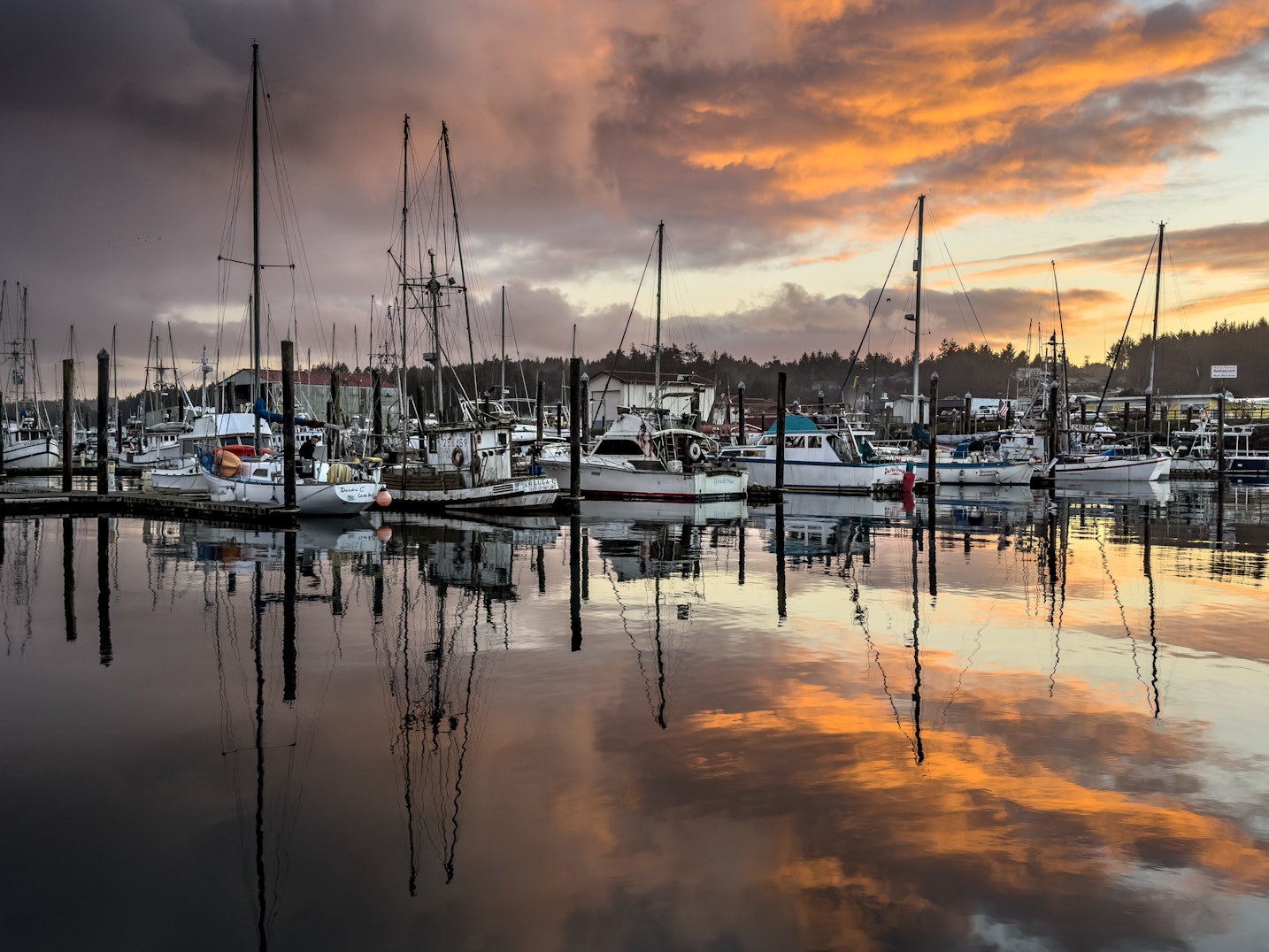
Charleston Marina- The Charleston Marina Complex is an active working marina with commercial and recreational fishing vessels. Visitors can walk the docks and watch fishermen unload their daily catch throughout the day.
Charleston Marine Life Center- A trip to the Charleston Marine Life Center , conveniently situated in the Charleston Marina complex, is often one of the highlights for visitors to Oregon’s Adventure Coast: Coos Bay, North Bend, Charleston. The center features a touch tide pool, fossil displays, and live marine exhibits. It is open year-round and suitable for visitors of all ages.
South Slough National Estuarine Research Reserve- South Slough National Estuarine Research Reserve , just south of Charleston, offers miles of trails through wetlands, estuary channels, and forested uplands. The area is open for self-guided exploration, with frequent sightings of bald eagles, osprey, herons, and egrets.
Where to Grab a Bite in Charleston, Oregon
- Cape Arago Cafe & Espresso - 91120 Cape Arago Hwy.
- Foggy’s Cafe - 91125 Cape Arago Hwy
- Ladybread Bakery - 6334 Boat Basin Road
- Miller’s at the Cove - 91149 Cape Arago Highway
- Monkey Business - 63516 Kingfisher Road
- Persephone Cafe & Bakery - 91152 Cape Arago Highway
- Portside Restaurant & Lounge - 63383 Kingfisher Rd.
Bookmark theOregon’s Adventure Coast: Coos Bay, North Bend, Charleston Dining Page ordownload our Dining & Coffee Shop Guide to help you choose the right spot during your next visit!
Where to stay in Charleston, Oregon:
- Beach Bound - 63319 Bastendorff Beach Rd
- Captain John’s Motel - 63360 Kingfisher Drive
- Charleston Harbor Inn - 63361 Kingfisher Rd
- Charleston Marina RV Park - 63402 Kingfisher Rd
- Bay Point Landing Modern Camping Resort - 92443 Cape Arago Highway
- Sunset Bay State Park Campground - 89814 Cape Arago Highway
- Sun Outdoors Coos Bay - 90281 Cape Arago Highway
Visit ourLodging Page to see a complete listing of hotels on Oregon’s Adventure Coast: Coos Bay, North Bend, Charleston, along with vacation homes, RV parks, and campgrounds in Charleston.
Other Charleston, Oregon Trip Ideas
- A Weekend of Fishing on Oregon’s much more – on Oregon’s Adventure Coast
- Saltwater Fishing – Ocean & Bay
- Kayak Fishing On The South Coast
- Crabbing and Clamming
- Charleston to Bandson Oregon Route
- Explore the Cape Arago Beach Loop
- Forest Bathing & Mindfulness
There is an adventure for everyone on Oregon’s Adventure Coast. Whether you are on the hunt for awe-inspiring landscapes, thrilling outdoor activities, or special events, you will find it here. Please get in touch with theCoos Bay-North Bend-Charleston Visitor & Convention Bureau
for more information. You can also followOregon’s Adventure Coast on Facebook
,@travelcoosbay on Instagram
, andTikTok
to find inspiration on the best spots to visit, eat, and explore at any time of the year.
